The Town Hall After the Layoffs. AI Cannot Walk Through That Door.
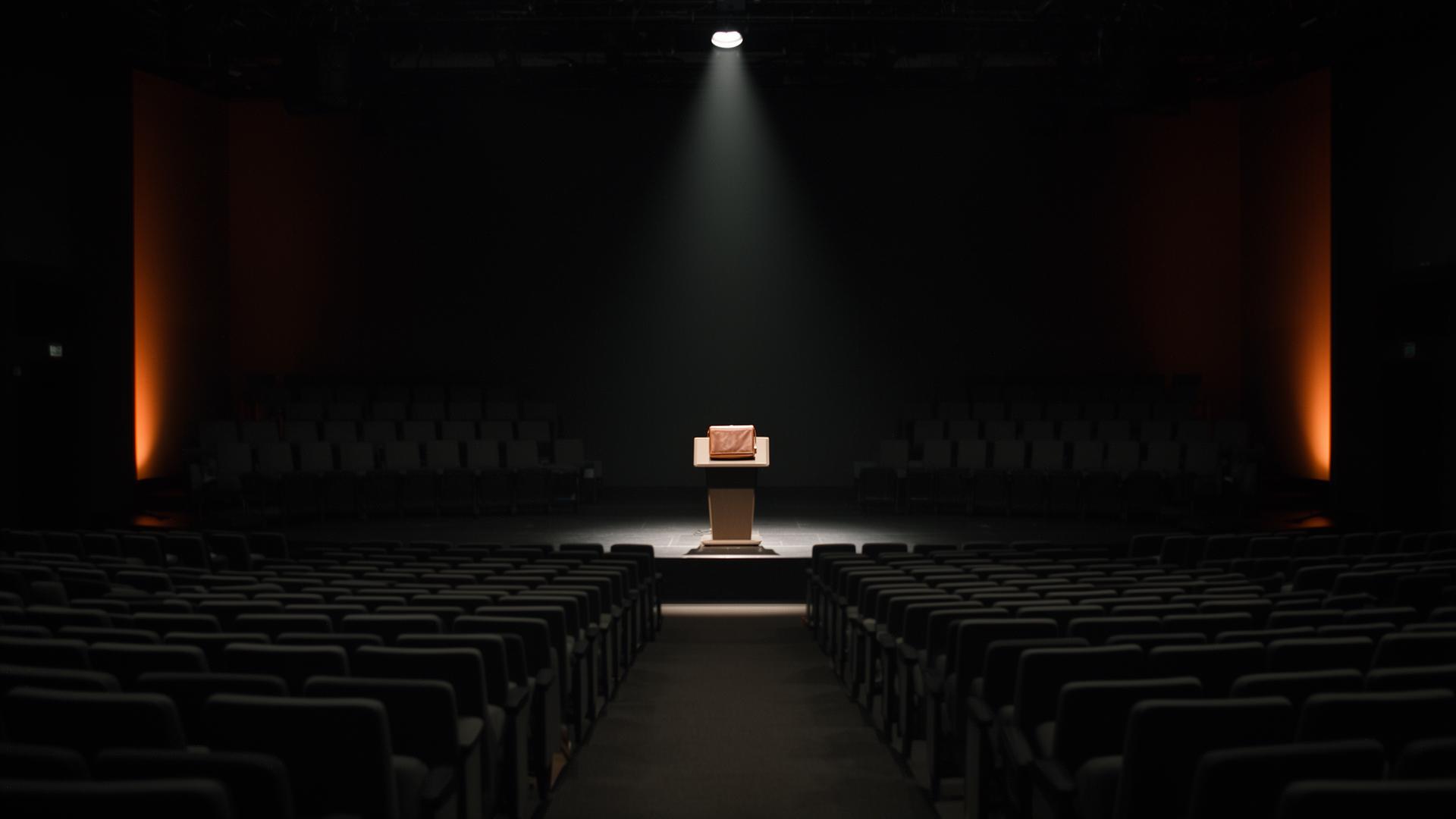
The hallway at 8:07
It is 8:07 on a Tuesday. The CEO is standing in the hallway outside the auditorium. Inside, four hundred people are waiting. The layoffs happened yesterday.
There is a script in her hand. AI helped draft three versions of it in under a minute. Legal approved it. Communications polished it. Version one was warm. Version two was tighter. Version three had stronger accountability language. They are all defensible.
None of them can walk through the door for her.
This is the room that decides the next two years. Not the press release. Not the financial commentary. The room where the people who were not laid off decide whether to keep believing the story.
What the room is actually testing
People in a town hall after layoffs are not listening to the words. They have heard versions of the words for fifteen years. They are watching for three things.
Did this leader make the call themselves, or are they reading a decision someone else made.
Will they say the part that costs them something, or will they hide behind process.
Are they still in this with us, or are they already mentally on the next stage of their own career.
The script does not answer any of those. The behavior does. Voice. Pace. Eye contact. Where the silence sits. What the leader does when the question from the third row lands.
AI can write the answer. AI cannot perform the silence.
What goes wrong in the room
The pattern repeats in almost every difficult town hall I have seen.
The leader walks in over-polished. The polish reads as distance. The room interprets it as a performance, which means it is not honest, which means it cannot be trusted.
The leader speaks too long. The pressure makes them add. More sentences. More qualifiers. More legal language. By minute four the room has decided the leader is protecting themselves rather than the team.
The leader avoids the hardest sentence. They get to the edge of accountability & pull back into we, the leadership team, are committed to. Everyone in the room hears the pivot. The accountability slot stays empty.
The leader answers the easy question fully & the hard question briefly. The room notices instantly. They will remember which question the leader walked through & which one they walked around.
Each of these is a behavior, not a character flaw. Behaviors can be trained. Most leaders have not been trained for this specific room.
What the room rewards
When the room goes well after layoffs, the leader does five things.
They name the decision in the first ninety seconds. Not after a story. Not after context. Early. Owned. The room exhales.
They say the cost. Out loud. The number of people. The function. The geography. The thing the model can write but most leaders cannot deliver without flinching.
They take the accountability slot. The decision was mine. I considered the alternatives. Here is the option I chose & why. Here is where I may be wrong & what would tell us.
They sit in the silence after the hardest question. They do not rush to fill it. The room registers that the leader can stay present in discomfort.
They end short. The leader does not extend the meeting to make themselves feel resolved. They give the room the next concrete thing — the next update, the next decision point, the next conversation — & they leave the stage.
Five moves. Trainable. Rare.
Why the AI era raises the stakes
Every town hall is now an artifact. It is recorded. It is summarized. It is clipped. The thirty-five minutes the leader spent on stage will be condensed into a forty-second internal Slack quote by tomorrow morning.
That clip will travel further than the meeting did. It will be sent to people who were not in the room. It will be sent to the people who left yesterday. It will be sent to candidates the recruiter is talking to next month.
There is no longer a small town hall. There is only the version of the town hall that the model will summarize & the people will share.
This raises the price of getting it wrong. It also raises the value of getting it right. The leader who lands this room is no longer just earning the trust of the people in front of them. They are earning the trust of every audience the clip will reach.
How we train for this room
You do not train for a town hall by reading a guide on town halls. You train by standing up in front of a room that pushes back, with the actual script you are about to deliver, with a coach who has been in this room before & can see the behaviors leaking — & doing it more than once.
Diagnose. Where does the behavior leak. The polish. The length. The avoided sentence. The pace.
Frame. What is the new standard. What is the leader trying to install. In language they would actually use.
War-game. Run the room. Push back. Throw the third-row question. Hold the silence. Watch the leader stay or collapse.
Brief & adapt. Walk into the real auditorium. Perform. After-action review. Reset. The next room is in three weeks. Same method.
Inside a quarter, the leader walks into the town hall a different person. Same script. Different behavior. The room can feel it within ninety seconds.
The line to take into the next hard room
Practice pressure before pressure decides for you.
The town hall after the layoffs is not a moment to wing. It is the moment that decides whether the people who are still there stay engaged for the next two years. AI cannot walk through that door for the leader. The leader has to. The question is whether they have rehearsed for it.
Frequently Asked Questions
Can AI help with town hall communication?
Yes — for drafting, structure, & pressure-testing the message. AI is a useful tool for preparing the words. It cannot perform the room. The voice, pace, silence, eye contact, & accountability posture all belong to the human leader, & the room reads those within seconds, not minutes.
What is the biggest mistake leaders make in a town hall after layoffs?
Over-polishing & over-explaining. Both read as distance. The room interprets polish as performance & length as self-protection. The leaders who land the room are short, name the decision early, own the accountability slot, & sit in the silence after the hardest question without rushing to fill it.
How do you train a CEO for a difficult town hall?
Live rehearsal. The CEO stands up in front of a room that pushes back, with the actual script, with a coach who can see the behaviors leaking under pressure. Diagnose, frame, war-game, brief & adapt. Repeat against the real rooms. Inside a quarter the behavior in the auditorium changes visibly.
Why is this room more important in the AI era?
Because the town hall is no longer a thirty-five minute meeting. It is an AI-summarized artifact that will be clipped, shared, & read by people who were not in the room — including candidates, customers, & the people who left yesterday. The room reaches further than ever, which raises both the cost of getting it wrong & the value of getting it right.
Ready to discover your profile?
Free 5-minute behavioral assessment. No sign-up required.